
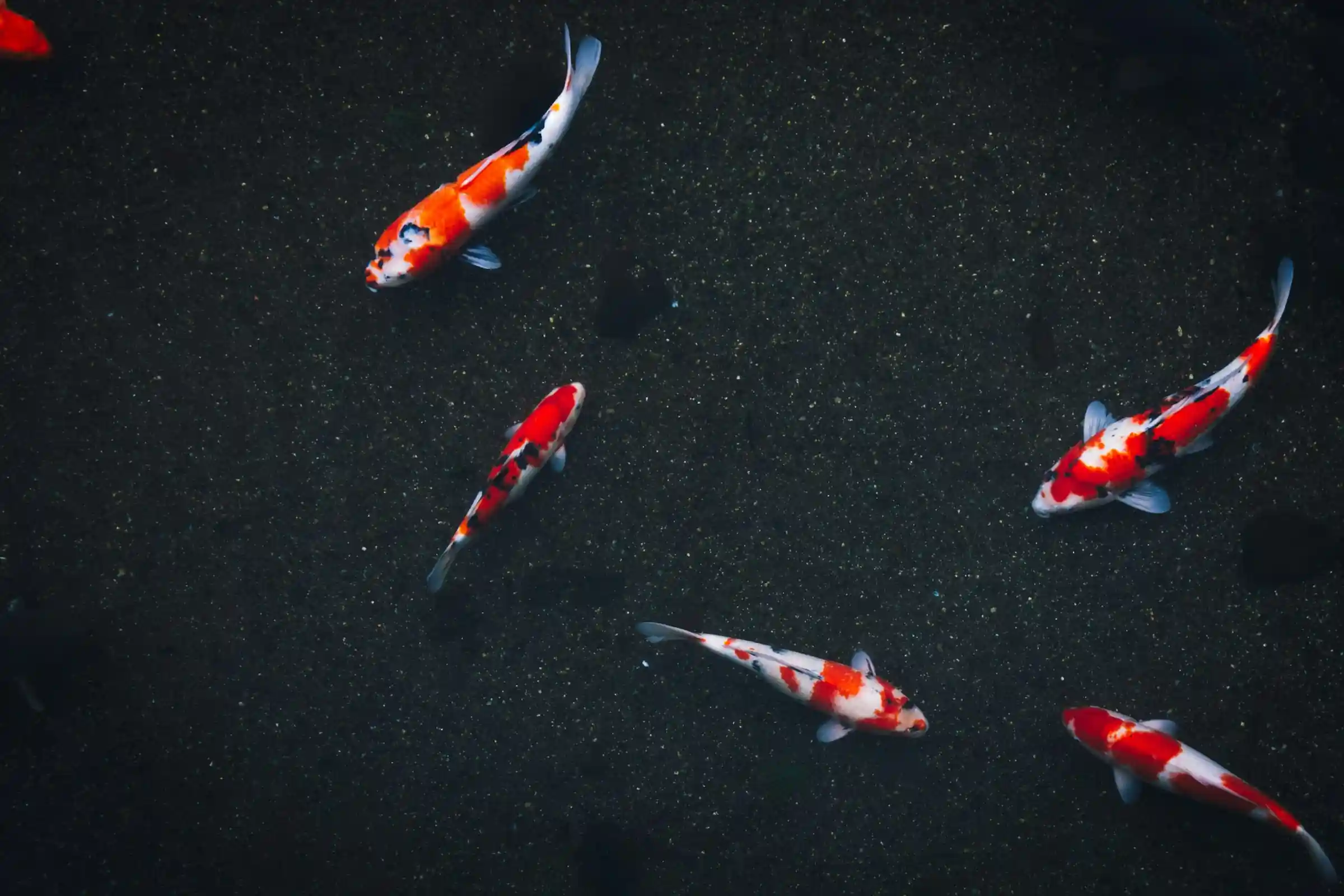
Butterfly koi, or Longfin koi, are known for their ethereal, flowing fins. Explore the origins and appeal of these graceful fish.
Butterfly Koi, also known as Longfin Koi or Dragon Carp, are a modern and somewhat controversial addition to the world of Nishikigoi. While purists in Japan initially resisted them, they have become immensely popular in the United States and Europe due to their ethereal beauty and graceful movement. The most defining characteristic of the Butterfly Koi is its elongated fins. The pectoral, dorsal, pelvic, and caudal fins are significantly longer and more flowing than those of standard koi, often trailing behind the fish like silken ribbons as it swims. Additionally, Butterfly Koi often possess long, prominent barbels (whiskers) that add to their "dragon-like" appearance. These fish are not a separate species but are the result of crossing traditional Nishikigoi with wild Indonesian long-finned carp. This lineage makes them exceptionally hardy and adaptable to various water conditions. They are available in almost every color and pattern found in standard koi, from Kohaku and Showa to solid metallic hues. The appeal of Butterfly Koi lies in their visual drama; while a standard koi is often viewed from above to appreciate its pattern, a Butterfly Koi is equally stunning when viewed from the side, as its fins drape and flutter in the current. Because their fins continue to grow throughout their lives, older koi can develop truly spectacular, veil-like appendages. However, this also means they require a pond environment free of sharp edges or abrasive surfaces that could tear their delicate fins. They also tend to be slightly more slender than their short-finned counterparts, though they can still reach lengths of 30 inches or more. Today a small number of Japanese breeders produce butterfly (hirenaga) koi with fine color and skin quality — though the variety is not recognized in traditional Japanese show benching (All Japan / ZNA), which is worth knowing if you're a show-minded buyer; it was developed from Indonesian long-fin carp in both Japan and the US, and Blue Ridge, which commercialized it in the US, says Japan likely began its hybridizing program first. Whether you see them as a modern innovation or a departure from tradition, there is no denying the magical, captivating presence that a large Butterfly Koi brings to an aquatic garden.
Keeping Butterfly Koi in Southern California
Long fins tear more easily and are more prone to fin rot, especially in ponds with sharp edges or poor water quality. Clean water and good filtration matter even more through a hot summer.
Butterfly koi swim more slowly than standard koi and can lose out at feeding time. Watch that they get their share, especially when you are feeding less in the heat.
Their colour and sun care follow their colour type: white, metallic or colour-changing (see those variety guides).
Summer care for every koi in SoCal
- Warm water holds less oxygen, yet koi need more oxygen as the water warms. That makes summer the season when oxygen runs shortest.
- Oxygen is usually lowest around dawn, because plants and algae use it up overnight. In summer, keep air stones, waterfalls or fountains running day and night.
- When oxygen runs short, large fish are often the first affected. The bigger and faster-growing your koi, the more aeration matters.
- Published "ideal" ranges vary between sources, from about 59–77°F to 68–78°F. Most sources treat the low-to-mid 80s °F as the point where you should cut feeding, add shade and add aeration.
- At about 82°F and above, feed less than usual. Koi can lose their appetite at 86°F and above, so offer small amounts of an easily digested food and remove anything left uneaten.
- Shade part of the pond, but not all of it, from the afternoon sun. A shade sail, pergola or floating plants will do. Don't enclose the surface so tightly that air can't move over it.
- Inland SoCal is much hotter than the coast. NOAA's 1991–2020 normals give an average July–August afternoon high of about 95–97°F in Riverside, 83–85°F in Santa Ana and 75–77°F at LAX (air temperature). Inland ponds therefore need the heat measures above sooner and for longer.
Key Traits
Renowned Breeders
Expert Advice
Planning a Pond?
Our team can help you select the perfect Butterfly Koi and design a filtration system tailored to your goals.
Start Consultation